Time to Pretend

In 2002, Caryl Churchill took on the moral concerns wrapped up in cloning and wrote A Number, a two-hander about a family fractured by the selfishness and remoteness of the father, who had his son cloned to bring on a fresh start. Churchill is more interested in the son’s hurt at his callous father than the particulars of cloning technology. Sisters, a new play by Matthew Libby at Writers Theatre, promises a similar meditation on family and technology. Matilda’s father introduces her to Greta, her younger sister, shortly after her mother’s sudden death. Greta is an AI chatbot (Libby is pretty vague about the tech behind Greta) and the girls’ father is an (apparently) genius computer scientist. It becomes clear fairly quickly that their father, unnamed and unseen, has created Greta to be a companion for Matilda who will help her process her grief.
Unlike in Churchill’s play, Dad gets away pretty clean. This play, ostensibly about the sisterly bond between Greta and Matilda, has a massive hole at its center when the father passes away in Matilda’s forties. I’m not asking for a tearful graveside denunciation by Matilda. What is missing, however, is any acknowledgment of the inherent cruelty of a father sitting his six year-old daughter by in front of a chatbot in lieu of comforting her. Despite some oblique references to the fact that he doesn’t talk about his wife’s death, Matilda doesn’t seem to think too deeply about his behavior.
His unquestioning belief that this is the way to help Matilda mourn her mother brings to mind Sam Altman proudly proclaiming that he uses ChatGPT to raise his kids on Jimmy Fallon, which received both Fallon's customary “oh, man! So cool!” as well as significant public ridicule. It’s lame and speaks volumes about your self-absorption to have an LLM raise your kids. The casualness of Matilda’s relationship with Greta also gives pause when we’re beset by headlines about children killing themselves at the advice of chatbots.
I can not overstate how little this play seems to think this is a bad idea. Does Libby actually not see the downside of outsourcing pediatric grief counseling to Gen AI? This goes beyond “depiction is not endorsement”, I’m genuinely unclear. Libby’s much-vaunted background in tech indicates that he may not find this questionable. Does he see himself in the unseen father? He surely doesn’t resonate with Matilda, to whom he attributes lines like “who am I supposed to talk to about periods!?”
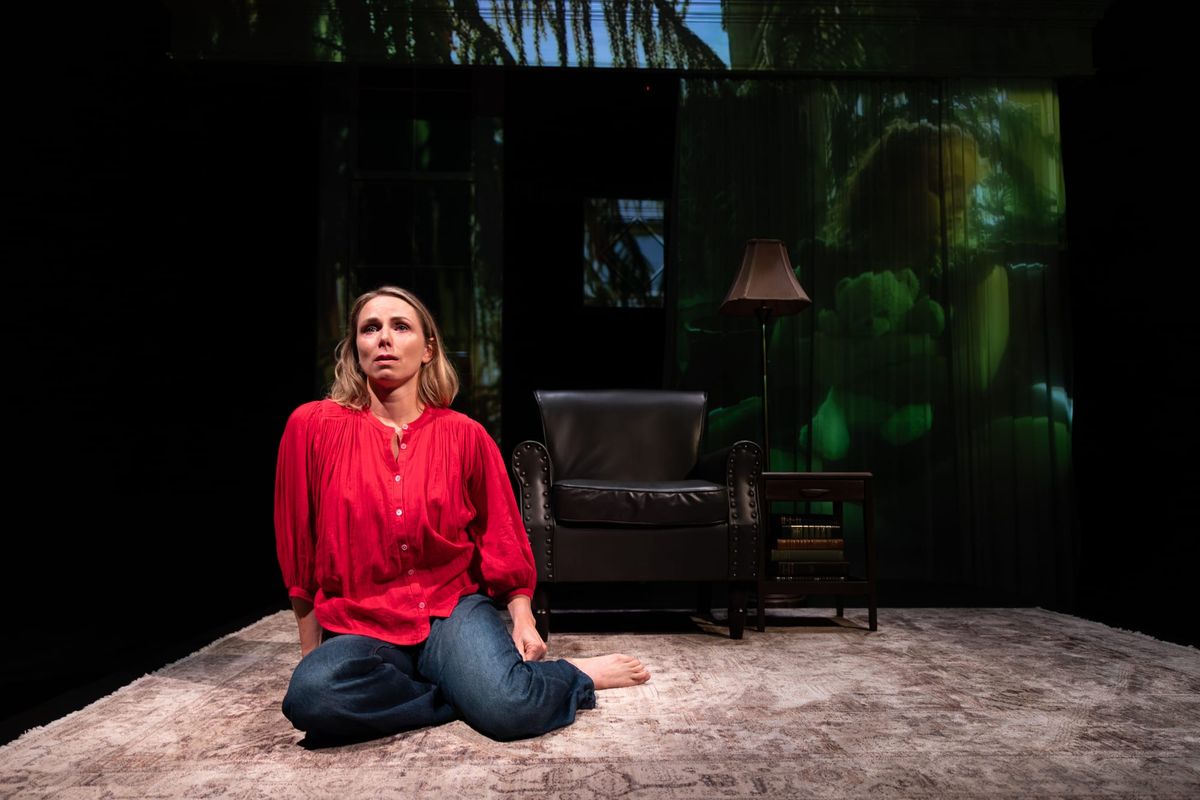
It’s a shame, because Brenda Barrie, who plays Matilda, is quite good, playing her from age six to well past 100. She is completely alone on A Inn Doo’s naturalistic living room set in Writers’ slick production directed by Jessica Thebus, accompanied by Chloe Johnston’s live voiceover as Greta and florid projections from Stephan Mazurek and Liz Sung.
My overall issue with Sisters is that it is begging that I have empathy for a chatbot. When Greta pleads for a body so she can be like “other people”, it’s honestly hard to care. The can of vegetables voiced by H. Jon Benjamin in Wet Hot American Summer carries the same pathos (even more if you’ve seen First Day of Camp, but that’s beside the point). To be fair, I’m probably the last person who might be invested in Greta’s emotional arc; I’m more than skeptical of Generative AI. It’s hard to figure out what Libby is after with Sisters. If he wants us to feel bad for Greta, he has to account for the fact that a lot of the audience just won’t buy it. If it’s exploring the hurt of a woman essentially abandoned by her father for tech (which is exactly what happens in A Number), Sisters plays it way too safe.
Before the show, I overheard a woman a few rows ahead of me tell her seatmate about something one of her friends had just dealt with. Needing to write an apology, her friend used an LLM to write the letter. My fellow audience member, reading the apology, noted that the final product sounded nothing like her friend. That overheard conversation was a fitting overture for Sisters. When we rely on spotty tech to do our emotional busywork, we’re doing a massive disservice to not just each other, but ourselves. I left Sisters wondering if Libby really cares about that.