Neo-Frasierism
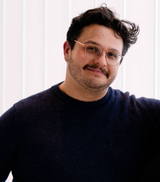
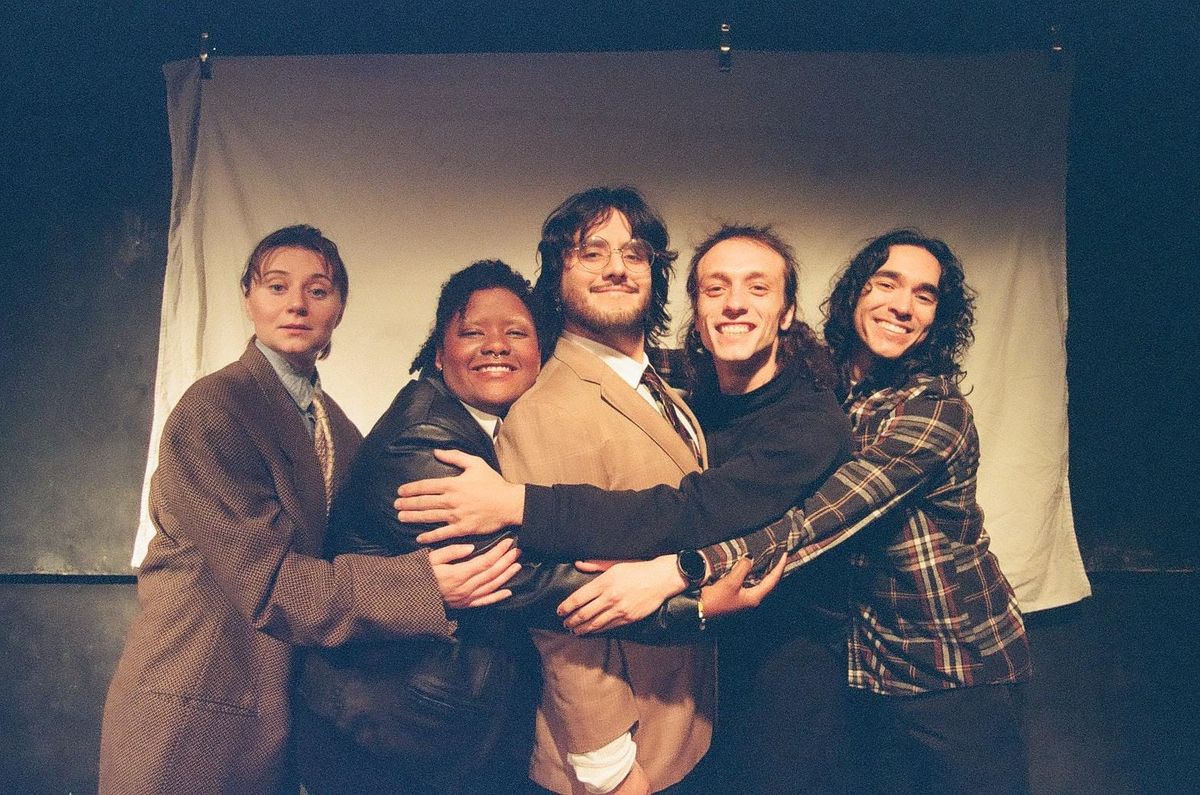
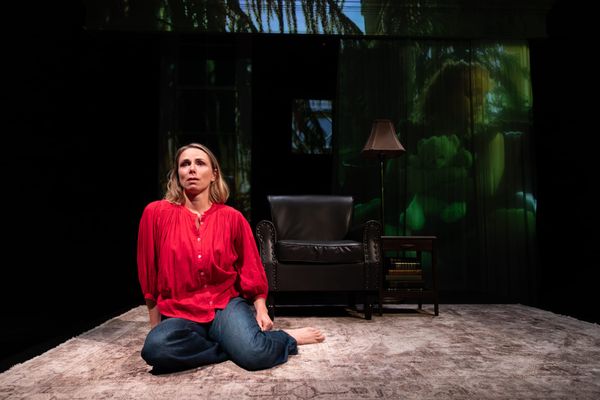
The work of legendary Chicago performance collective The Neo-Futurists and the sitcom Frasier seem worlds apart at first blush. Alé Ramirez, a longtime member of the collective’s ensemble, would beg to differ. Ramirez’s new play Spinoff, now running through May 16th at the Neos’ home, The Neo-Futurarium, uses sitcom tropes to retell a chapter from recent family history and examine the place of community in an atomized world. I got to interview Alé right as Spinoff started rehearsals, and we talked about the play, the ins and outs of making non-hierarchical theatre, and, of course, Seattle’s finest radio psychologist.
RSA: What is the story behind Spinoff?
AR: The… general elevator pitch is that two and a half years ago, I had to move back to my childhood home to take care of my mom who was having this mysterious medical ailment. I was far from friends, far from the theater, far from the city, and all the things I'd kind of built my life around. [I was] face to face with my mom and our relationship, being like, “We're both adults and we're both sharing the same roof, there's so much that's been unaddressed…” And during that time of wading through appointments and [reversing] roles of care, I also discovered the show Frasier, which I'd never seen before. I just kept finding, one, a lot of joy out of it, and then two, a lot of parallels. I was just like, “you know what? I can't escape this show and I can't escape this situation. And they're all kind of [merging] together.”
RSA: It seems like you got interested in the emotional intimacy that caregiving requires.
AR: Totally. What the story [covers] is that we had grown very distant as I built my own life as an adult. Even from an early age, [in] middle school, I was always trying to find my community or my passions elsewhere. I was trying to get out of the house as much as possible and… was getting further and further away. And then, we were roped together [which] made me sit with the question of, “Why are we this far apart? And do we want to get closer? How can we make that happen?” [Spinoff] retell[s] that story using the language, staging and form of Frasier and nineties sitcoms.
RSA: How was Spinoff developed?
AR: I think it was a year and a half ago now that I was starting to come back into the city after this time of caretaking for my mom and starting to dip my toes back into making stuff again, getting to rediscover the Neo-Futurist aesthetic. I just started finding a lot of parallels between Frasier and… things that were going on in my life or had happened. I was waiting for one of our [Infinite Wrench] shows to start and I was filling out a notepad and I was like, “oh my god, this would work. This would connect, over here. This would connect…” And I was able to have a couple of meetings with our artistic director Connor Shioshita Pickett and an early pitch with my current director, Abby Pajakowski, where I was like, “Hey, I'm brewing all these ideas. Does this feel like anything?” Having the confirmation of another person [saying] that there were a lot of opportunities for playing with form was very exciting. Also… getting to make a Neo-Futurist show with a cast, which hasn’t been done in a while. We've done a lot of solo shows in the last couple of years, and a chance to do a show with a team was incredibly exciting. I drafted up a proposal for our salon, which is… four to five hours of just intense listening and feedback to get an idea of what these pitches are. Things get approved by consensus, [so] getting to the end of this two-day process and seeing a room of ensemble members all giving a thumbs up, like, “we all back this thing” was incredibly encouraging.
RSA: How long have you been workshopping this with the Neo-Futurists?
AR: For about a year. The thing with the Neo-Futurists, being in [The Infinite Wrench] regularly and making consistent work there [means] you discover that you're kind of workshopping a show before you even have the idea for the show. The themes [and] forms I'm playing with all seem to be pointing to the fact that I want to tell this story. So, I’ve officially been working on it for like the last eight months, but I [also] had a play called “Frasier Play” in like a year ago.
RSA: I'd love to hear you expand on the particulars of being in the Neo-Futurists. For example. you have to write a certain number of plays every week when you're in The Infinite Wrench, and, because of how the Neo-Futurists operate, you always have to play yourself and you always have to tell the truth. How has that approach fostered your writing?
AR: In making the work, I’m always looking at… what stories keep popping up, what themes keep popping up. [As well as] what forms or what kind of styles [I’m] comfortable with, and then trying to find the opposite to balance yourself out, being like, “okay, what's something new I haven't done? What's something new to explore?” It gives you a wide berth of data. The thing with doing the show, the actual process of it, how it affects my life in an interesting way, is that I'm constantly wrestling with this question of, “Am I sacrificing a family life or my relationship with my family for this performance kind of life? Or, vice-versa, am I sacrificing the full… capacity I can give to making art to keep maintaining these family relationships?That dynamic was consistent throughout… my early years, which then also affected what I was writing about. I [had] this relationship with my family where I [felt] distant, [or] like I'm failing. The moments of connection really matter to me. There's still something about that… that I can't let go of fully. Then where do I address it in my art and how does that help me process? The art sometimes create[s] a distance or situations where I'm fully in control when I'm making this play. But then… have I actually texted or called a person? Am I doing the actual work in real life to make that connection work? Those elements are constantly wrestling with each other and they're constantly affecting each other.
RSA: I think that trade-off is also really central to how people think about caregiving. You have to suspend some element of your life, so it's interesting hearing you talk about that in the context of creating art.
AR: You kind of have to give yourself over to it. And part of what the show is wrestling with is… what draws a person to that decision? What draws [me] to that decision? Part of it is seeking connection. Is part of it guilt? A need to do the right thing?
RSA: How do you think your writing has grown since joining the Neo-Futurists?
AR: I think my writing has had to lose its preciousness a little bit. I've had to become much more comfortable with and enjoy the gift of editing, feedback, and looking for clarity. Am I communicating my ideas in a way where I can come in with a lot of feeling? Is this all connecting in some kind of way? I've had to continue wrestling with that. Something [might] sound great to me, but, grammatically, does [it] make sense? Working within the Wrench is consistently pushing me to write in so many different forms so that I'm not repeating myself or sounding the same in every play. It's challenging to find what you're good at and strengthen those things while also aim[ing] for the kind of writing or performance styles that are new to you, strange to you, and try to be like, “okay, what does this say about me? How can I grow in this way too?”
RSA: You kind of answered this question already, but can you talk about what it means to be a Neo-Futurist ensemble member outside of just being in The Infinite Wrench?
AR: You've got your role as an ensemble member in The Infinite Wrench, writing new plays every single week and pitching them on Tuesday, rehearsing them, and then performing them Friday, Saturday, Sunday, doing it over and over again. Outside of that, we wear many hats [on] the administration side. Everybody's on committees, whether it's marketing or financing or budgeting. We all kind of have eyes [on] keeping the company afloat and thriving. We've got company meetings once a month where we check in about all the goings-on. We have artistic meetings once a month, regardless if you're in the show or not, to come in and to talk about the artwork and the aesthetic and questions about specific plays that keep the conversation alive [of], “What is it that we do and why do we do it?” And then there's actual staff roles. The people in the offices are also performers. So whether that's like artistic director, our assistant artistic director, education lead… all of those roles are filled by performing ensemble members as well.
RSA: A lot of meetings.
AR: Yeah. Meetings and emails and trying to figure everything out. For the most part everything is run through consensus-driven decision making and anyone can bring a proposal. Everybody can bring a proposal and often do for changes within the company and changes within the show. We regularly hold these discussions and make room for that space and then try to find ways to agree or to be like, oh, we gotta figure something else out. It's one of the most hands-on and caring companies. We're very people-forward in our approach and there's a deep passion for want[ing] to be able to help both keep this going and put it in a better place than when [we] came in.
RSA: What kind of theater were you making before the Neo-Futurists?
AR: Before the Neo-Futurists, I was doing improv, a little bit at the Annoyance Theater, a little bit at the Crowd Theater. I was doing sketch work there as well. But pretty early on, I took a Neo-Futurist class… in 2018. I started making art in that aesthetic with folks from that same class, in whatever space that we could get during that time as Stop Motion Plant. We were just making art through the year before the pandemic and [then] the first year of the pandemic. They're still around, but I don't [get] as much time with them after beginning the rigorous schedule of the Neo-Futurists. They're an incredible company that still does monthly showings of works in progress. They've built a really good DIY community space for the Chicago theater scene.
RSA: Changing tack here… this is the big question. This is about Mr. Crane himself. I want to hear you talk about what you found in Frasier. You obviously found resonances with the situation you were in, but I think a lot of people think of Frasier as a punchline, this bone-dry, hyper-erudite sort of comedy. Where do you see yourself in the show, and from the perspective of a writer, how does the comedy function to you?
AR: I feel like it's undeniable. I think it's endlessly creative and silly and with a lot of heart to it [and] endlessly surprising. Ultimately, every time you throw on an episode, something is going to catch you off guard. You are going to laugh at something, either because it's a really deep cut, like a high-culture reference to some kind of furniture or opera, or somebody taking the piss out of that. Different people who have not seen the show would be like, it looks pretty dry, or it looks like it's just rich-people nonsense. No, that's the best part! It's rich people nonsense! And it's so fucking funny. They know that it's ridiculous. And they are in love with poking fun at it while also playing to the top of their intelligence. I'm so, so charmed by the work of David Hyde Pierce as Niles. He’s an incredible clown, but they brought him in because he looks like Kelsey Grammer, especially like a younger version of him. And they wrote him in because they [thought] it would be fun to… use him to make Frasier seem more normal. John Mahoney [the Chicago theater legend who played Martin, Frasier and Niles’ father], too. My God. It's a show that is full of top-rate talent, incredible writing and just the craziest plots, usually having to do with like, uh, Frasier getting in over his head, insistent that he knows the right thing and then everything crumbling around him in such like a fun way.
RSA: I like the point you make about them playing to the top of their intelligence, but also kind of deflating it.
AR: The Cranes know their stuff. The writers know their stuff. They clearly also enjoy those things and are willing to make fun of it and play with it. And… sometimes you don't even need to know specifically what they're referencing, because [it] just sounds funny. This is a turn of phrase that [is] ridiculous to hear.
RSA: By way of research, did you spend any time looking at the roots of Frasier? Outside of it as a vehicle for Kelsey Grammer because he was so hot on Cheers?
AR: I did a little bit of research into what every actor was taking away from it, or their approach. Kelsey Grammer talks about his and the writers’ love of [broad] stage comedies. What really comes through in the show is that these are folks who were raised seeing… really big, ridiculous kind of comedy that plays to the masses and pokes fun at the upper class. Also, they were just like, “We're going to stop making Cheers. It'd be nice if we could all just stay in this same studio, build a new set and just keep writing.”
RSA: Frasier and Cheers actually used the same stage?
AR: It's the same sound stage. [Grammer] spent 18 years of his life in one fucking place.
RSA: What is something that you learned either about yourself or about anything at all that you want the audience to receive when they see Spinoff?
AR: What I learned in writing and making this, and reflecting on that time with the specific people that I'm working with… was the intense necessity [of letting] go of protagonist syndrome, to let go of this idea of, I am the spinoff. So much is being put upon me, and I really lean into the joys of the ensemble, something that's I've always delighted in. But something about this process, and what I discovered in writing the show, is a tendency to rush in and be like, “no, no, no, I've got this,” as opposed to being [asking for] help. While asking… for that might be so scary, [the] real joy is, it's so fun to be in a sitcom ensemble. It's so fun to have your team around you. The connection that I find with meeting my mom where she's at and reaching out and being like, “No, it's better that we are together through this.”
RSA: There's something really political about that with regard to a collectivist aesthetic. Which is probably not what people expect from Frasier, but that's exciting. Is there anything else on that topic that you shout out?
AR: What's really special about this show and going along the ideas of, “What's so special about an ensemble?” is that this particular ensemble is [made up of] a lot of folks that mean a lot to me. I'm working with my friend Julia Rowley. We grew up in the suburbs together, we did high school theater together. We've been in Chicago performing in theater, but in our own different worlds. And this is our first time coming together to make something. And Jasmine Henri Jordan and aussie b are two Neo-Futurists who I have a deep, deep connection to. Evan Morales, who is new to my life, has been an incredible, trusting, and talented creative team player, who was brought in as somebody who doesn't know me to play my mom. I wanted to find someone who [didn’t] know me so that we can play with that idea. And then, [Spinoff is] directed by Abby Paj, who I got cast with originally in the Neo-Futurists. We've been making plays side by side for five years, and this is the first time we're really collaborating and devising something together. This team was pulled together and the entire time we've been going through this and implementing that into the work,, I just keep being like, “damn, this is a dream team.”
RSA: Amazing. Do you have anything else for the people?
AR: I just watched the episode of Cheers where Frasier appears for the first time. I think it's the premiere of season three. And he’s set up like a jump scare in the background. They're all talking about taking Sam Malone to a psychiatrist. After a while, Sam says he'll meet him, and then he stands up and goes, “I'm Frasier Crane.”
RSA: It's almost like a WWE entrance.
AR: Truly. And then, every time they say Frasier, it feels so odd. Like, “this is the man I love in this setting where they don't even know that he's Frasier!” They barely even get it. It’s about eight more years until they really get it.
Spinoff is running at the Neo-Futurarium (5153 North Ashland) through May 16th. Tickets are pay-what-you-can.