Canines and Creation: Henry Hanson on Dog Movie

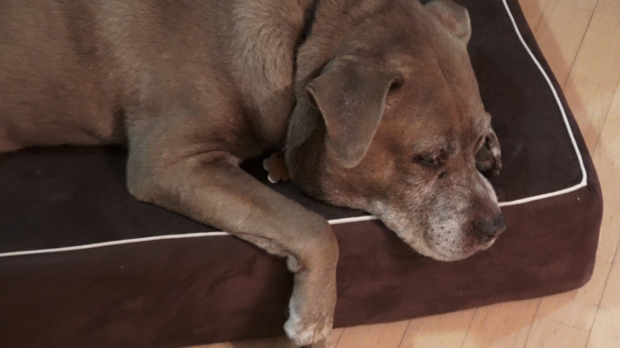
Henry Hanson is a Chicago-based filmmaker whose feature-length debut Dog Movie is now on The Criterion Channel as part of the collection Tramps, Troublemakers, and Trailblazers: Trans Filmmakers, curated by Caden Mark Gardner and Willow Catelyn Maclay. I was lucky enough to interview Henry to talk about the roots of Dog Movie, process, and questions of representation.
RSA: Was there a particular incident that inspired Dog Movie?
HH: There was not, it's kind of an amalgamation. We tried to just sort of make the idiomatic story of lots of experiences. Jessi [Gaston, Hanson’s partner] and I lived in a warehouse with between 10 and 14 people at any given time for about four years. We've all had lots of roommate issues. Housing is time and again one of the biggest issues in the queer community, and that’s where a lot of issues come to the surface but it's not like a one-to-one with any particular thing that happened.
RSA: You’ve mentioned that these kinds of personalities aren’t exclusive to any particular demographic. But there's something about the way that Haven and Arrow use jargon that's very specific to a Gen Z intellectual crowd, and I see the film poking at that. The cut to Sarah Schulman’s Conflict is Not Abuse is pretty telling.
HH: That's one of the most popular jokes in the movie, I think.
RSA: Like, half of the Letterboxd reviews say something along the lines of, “I was at a screening of Dog Movie and half the audience gasped at Conflict is Not Abuse.”
HH: It always gets a huge reaction from the crowd… I love that. Actually, a friend of mine was in touch with Sarah Schulman and sent her the movie, [which] she liked [[1]].
RSA: How did you find this location? I know Jessi was living there at the time.
HH: Basically everything about the production was based on using resources that were already at our disposal… There was no aspect of making this film where the artistic vision came first. It was entirely an exercise in using available resources, down to the story itself. My initial idea was, I want to do an experiment where I make a movie as cheaply [and] quickly as possible, improvised and all in one location with as few actors and crew as possible. I came up with this premise specifically to meet those conditions. I looked through old notes and thought, “here's one that could work.” And then it was… “where can I do this?” And Jesi was living in a one-bedroom house. So it was easy enough to… do it there.
RSA: The credits say that you also did the set dressing yourself.
HH: I was doing loose Dogme 95 rules. I didn't want to buy a lot of props or whatever, but I… didn't really care about [being] dogmatic – no pun intended. The one piece of set dressing I want[ed] to bring in was wall art that… expressed something about these characters' personalities. At first I was going to purchase things on Etsy… woodblock prints and whatever. And I realized that a lot of that art… had sort of shallow, positive messages [that] were commands, and I thought, ‘oh, that's funny.” I also just kind of realized I could make those myself on Photoshop and have them printed at Walgreens. And that was maybe a little less insulting to the people that made [those pieces], anyway. And cheaper.
RSA: Could you talk about casting Dog Movie? You said that the casting process for this was not a traditional casting process for a variety of reasons.
HH: I didn't have auditions or anything, I just asked the people that I wanted to be in it. I basically wanted people that I knew would be compelling performers [and] that I had worked with before, [and] people who I knew were down to think about things on the production level. Jessi is my partner of 10 years and we met in undergrad doing comedy and film stuff, and we've been working together for a really long time. Same with Milo, actually. The three of us... and another friend actually shot an improvised movie when we were like 20 that we never finished editing. We kind of had a rapport already, they’re both filmmakers in their own right. So I'm very comfortable asking them to think... beyond just the performance. And then Marten, I had met through auditions for my short Bros Before. And he was not primarily an actor either, but he has various kinds of performance and arts experience, and we just clicked when we collaborated. He was just kind of naturally… thinking about the whole production, not just his performance. And he ended up contributing a lot to [Bros Before’s] production design, especially his character's bedroom. He was just thinking a lot about wardrobe and other elements of the film. So I thought, “Here's three people that I know can do the thing that I'm thinking of.” And again, when I set out to make this, I genuinely was not sure if it would turn out as a movie that made sense, or if it would even work. I went into it thinking of it as an experiment.
RSA: You also mentioned earlier the improvised/devised process. Would you say that's typical of a Henry Hanson picture? Or are you typically more traditionally scripting a film?
HH: Bros Before was the first film that I put my name on, and I treated it as my sort of debut in terms of my career. Obviously, that's not actually the first thing I did. I started making films when I was a young child and went to film school and everything, and I did a lot of stuff before that, but it takes a while to actually make the thing that you call your debut. Bros Before was entirely scripted. I thought I was going to want it improvised more, but the script was good, so we just kind of didn't need to. Before that, I had done scripted and unscripted stuff. I did improv comedy when I was younger, but [Dog Movie] was the first thing that I sort of decided that I wanted to develop [in] an improvised filmmaking process. Since then, I’ve written a script and I’ve also worked on another improvised movie. I mean, it's kind of different for some other reasons, but it just depends on the project.
RSA: This isn’t something you hear often from filmmakers, where they're essentially willing to have two different approaches to making films. I think that that must at least keep things interesting for you.
HH: Definitely. I like to think it's infinite approaches because everything is dependent on the story and the circumstances. I think a lot of people think that… I'm only interested in DIY-type filmmaking, and that's not quite true. It's more that, if given a certain budgetary constraint, I want to lean into that and... embrace the budget… and the circumstances of making it. If I had a larger budget, I would approach everything entirely differently and tailor the project to the resources that I have in that moment. I definitely don't want to be stale or repeating myself. It's fun to try different things. I just think every story needs its own approach, I guess.
RSA: Could you talk about specifically the process of improvising this as you were shooting with the trio?
HH: So, basically, I came up with the premise “couch surfer has the same name as the dog”. Then I met with each of the actors individually [for] open-ended conversations. I just wrote down everything we talked about with each person, and then I [turned] those notes… into a loose outline. And the other thing I was working off of for the outline was [that] I wanted to use each room of the house [and] pay attention to the combinations of the characters, making sure that each combination of characters is represented and balanced in some way. Then, also maybe solo time for the characters… I [would make] a scene heading, with what part of the house [the scene] is in, what time of day, and then a two-sentence description of which characters are in it and what happens in the scene.
RSA: How many days did you shoot for?
HH: Four… it was really quick. I think the initial shoot was three days, and then we did a pickup shoot with Jesi and Marten. Once we were on set, I approached each individual scene by reading aloud what I had written in the outline. And then, “all right, just try it out.” I filmed the first takes, and I don't think I used most of that, but they would just do a version of it and then we would talk and say, “Okay, what are the beats that you just hit in that scene?” and make adjustments from there. Once I got performances, I would do a second angle. I improvised the camera movements too, and I basically did… my own version of shooting coverage where I shot the whole thing, but I allowed myself to turn my body as much as I wanted and pivot and zoom as much as I wanted. I was just trying for maximal humor with the camera movements. Then, I would stand in a second place that… fit the 180-degree line. As long as I [stood] in two spots at compatible angles, I [could] just do whatever with the camera. For every scene, I averaged three takes.
RSA: Your website refers to Dog Movie as being “inspired by Hong Sang-Soo but [coming] out more like Larry David.” You've also spoken about Gregg Araki and Dogme 95. I assume that Dogme is, at least, an influence on the title Dog Movie, what from those various filmmaking approaches ended up in Dog Movie?
HH: With both Sang-soo and Dogme 95, [what] inspired me was primarily the production methods. Honestly, I don't actually think that the content of the Dogme movies really has anything to do with my film, and I don't even particularly feel that connected to a lot of those movies. I appreciate them, but it’s the methods that I am emulating or interested in. I looked at the Dogme 95 rules and I [decided] to do no lights besides practicals. I basically didn't do any production design besides what was already there, and [had] no tripod. The thing about that was, it more so made me feel like I had permission to do those things. And then with Hong Sang-soo, I was really inspired by the way that he bases the scripts on conversations with the actors and makes everything so tailored to the specific actors and the locations. It's really grounded in the material constraints of the production in these ways. Also the fact that he allegedly writes all the scripts the morning of the shoot.
RSA: His films all seem so improvised despite that.
HH: Exactly. And I do quite like his films. I think mine didn't come out with [his] vibe as much. I feel like he doesn't have as many jokes in his movies. I also think mine ended up being a lot more bombastic and sort of messy. It was mostly about the methods and the permission to do things without being too precious. Filmmaking typically takes so many resources, and you typically spend so long doing everything and getting everything perfect, [which] can be a really oppressive feeling. I think a lot of it was about finding ways to justify doing things loosely and cheaply. Since I've made it, I realized all these other things that influenced it so much. When I was [younger], I watched so much The Office. I hadn't thought about that show in so long, and then it was on at a bar and I [realized] this actually really influenced [Dog Movie]. It also got compared to Trailer Park Boys, which I appreciated as well. In my mind, I have loftier influences, but… I've just consumed so much [lowbrow] comedy that that is … always going to come through in my voice.
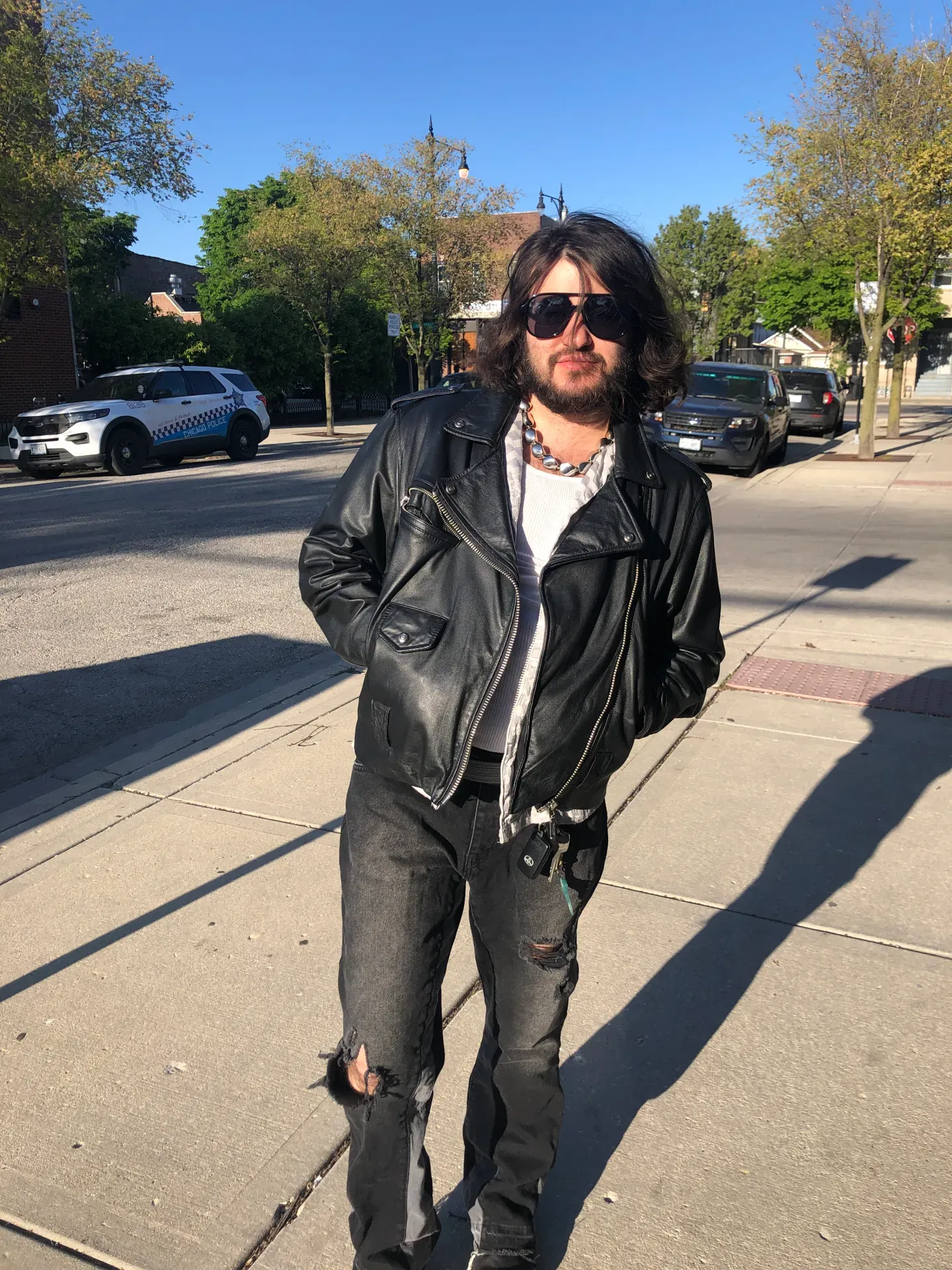
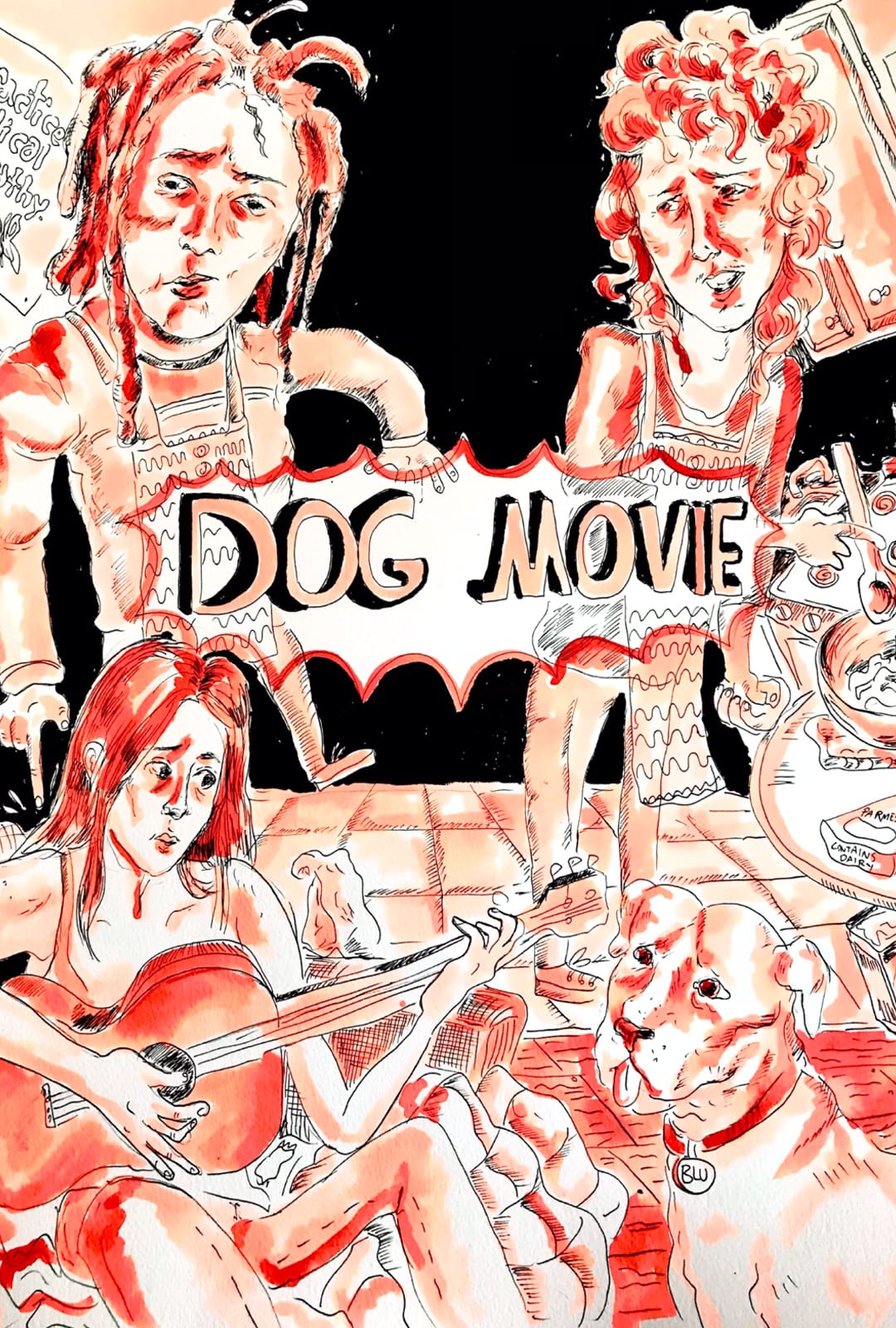
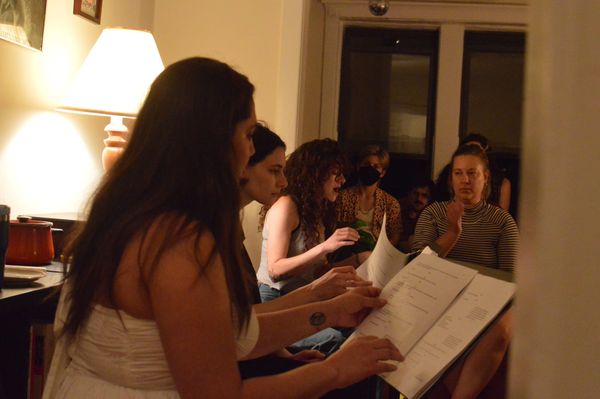
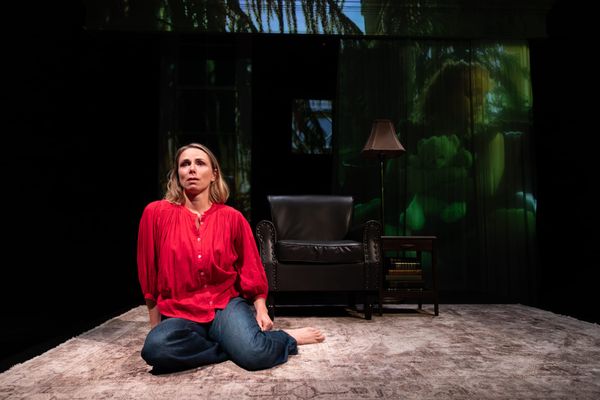
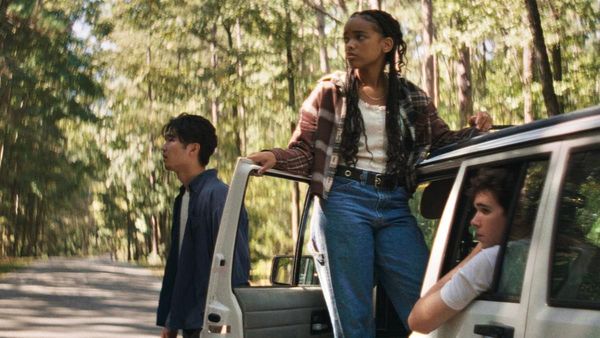
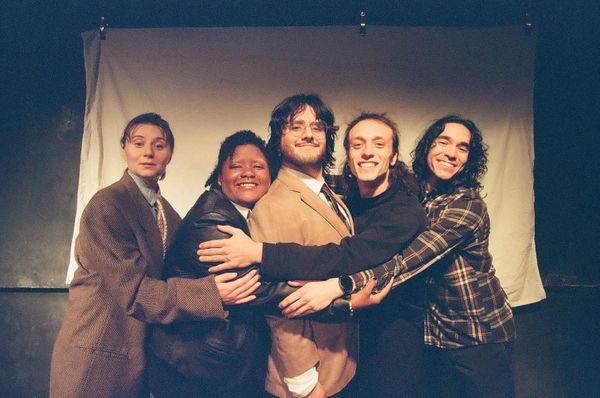
L: Henry Hanson, credit: LAL R: Dog Movie, credit: Hal Schrieve
RSA: How about Gregg Araki? Or was that more for Bros Before?
HH: That was more with Bros Before. He wasn't really top of mind when I was making Dog Movie. I actually spent more money on Bros Before. I really wan[ted] to make a Gregg Araki-style movie. And I [didn’t] even know where I was going to get a budget … like [I did] for Bros Before. So what could I do for less?
RSA: You’ve talked a lot about on what terms you consider yourself a trans filmmaker and a queer filmmaker. What does being a queer and trans filmmaker mean to you?
HH: I like to say that I'm working in the tradition of the Queer Underground because… that evokes a very specific legacy. It's not so much about sexuality so much as, there's this specific tradition and specific types of art that came about from these groups of people who were marginalized… in various ways and unable to tell the kind of stories that they wanted or… exist in mainstream media. And so, in order to tell queer stories, they necessarily would have to turn to alternative production methods. John Waters would, like, borrow [a] camera from the news station and make things cheaply and outside of the mainstream production system. A lot of these artists were also working in other mediums and other kinds of performance like theater, so a lot of queer film [has] very theatrical influences, things are set up like a stage with very flat lighting [with] the deployment of camp. I'm very involved in this global network of trans filmmakers, film workers, and programmers. And I’ve definitely noticed some similar stylistic tendencies coming out of it. You know, the “camcorder movie” is very popular and other people are doing improvised filmmaking. Obviously, this comes out of not having a lot of resources. At the same time, I don't think that making an improvised movie [is] an inherently trans thing to do. My investment in the trans film world is a material one, it's a labor issue. I’m invested in that because I want to be in solidarity with people with similar goals to me [who] are being gatekept or excluded for the same reasons as me, and I think we can rise together stronger. When you're talking to people a lot about art, you tend to become influenced by each other and that's awesome. That's just to say, there are tons of trans filmmakers doing things that have nothing to do with my work, and I don't think being trans or having trans subjects matters inherently creates any kind of aesthetic linkage between films. New Queer Cinema refers to a very specific artistic movement, and things can't be New Queer Cinema just because they're queer. However, queerness is a precondition for it to fall into this aesthetic movement.
RSA: Any sort of identification as an artist has to be on that artist's terms. With regard to the Trans Trailblazers collection, Louise Weard also made a camcorder movie with Castration Movie, but it's also an epic, and it’s different subject matter than yours.
HH: Louise and I have a lot in common creatively. It’s funny, we were not aware of each other's projects when we started them. But it's totally good to platform people whose work isn’t [necessarily] the same. This is what I say about trans film festivals. In order to get to a place where trans filmmakers are integrated into the industry and can make work about other things, there’s this sort of necessary step, because the things that bar us from entering the industry are inscrutable to outsiders. Only a targeted, culturally sensitive solution to that can be the thing that overcomes it. I think a lot about Black film movements and Black feminist film movements. I think that's the blueprint… Black organizing is the blueprint for any American organizing. So, I'm all for culturally specific interventions into the systemic exclusion of trans people in film. But that is a very different thing from [any] criticism that aims to classify a creative movement.
RSA: Do you value trans representation as a feature of your filmmaking?
HH: It's something that a lot of people say my filmmaking does and that means a lot to them. So I’m glad that that is meaningful for people. It's not exactly what I think about. I guess what I'm most interested in [is] putting hyper-specific things on the screen. I actively try to identify patterns in the world or in [my] social circles that I haven't seen put to screen. Representation is definitely a way that you could classify that. I do think that the word representation has come to mean something else, [like] a sales tactic, or even [telling] a conventional story and slotting someone with a different identity in without changing anything else. Genuinely portraying the perspective of someone who is socially marginalized necessitates some kind of intervention into the structure of the storytelling. Of course, I’d be lying if I said I didn't lean on the trans film angle to connect with audiences. It's a really good shorthand for finding people that will probably like my stuff, and I want to reach them. I don't want to tell the coming out story or the trauma whatever. People are already trans, they're living their lives. That's just much more interesting. There [are] so many aspects of being transgender that are really, really funny, and I truly cannot believe how much good material is left on the table by people who choose to tell the same stories over and over. I have lived slapstick mistaken identity plots [with] people that I met five years ago [who] think I'm a completely different person. There's so much good material, and I can use it.
RSA: Along the lines of representation, but in a different form, do you think of yourself specifically as a Chicago filmmaker?
HH: Sort of. I've made all of my movies so far in Chicago and I'm very enmeshed in the community here. I'm hesitant to say that I am a Chicago filmmaker, just because I wasn't born here and I'm not opposed to making films elsewhere. A lot of Chicago filmmakers, in their sense of hometown pride, tend to preemptively close the door on the rest of the world. I really don't want to fall into that trap because there's a lot of really cool stuff going on in lots of other places, [even] New York and L.A., which is kind of taboo to say in some parts of the Chicago film scene.Similarly, I think if I were to strongly identify with being a Chicago filmmaker, I would want to know what that means in terms of the art itself. I'm not sure that I have any hypothesis about specific Chicago film tendencies [other than] mumblecore, obviously. Dog Movie gets slotted into mumblecore a lot, but that's kind of silly. I guess it fits into certain tendencies that we've seen in Chicago. I love Chicago [and] I’m happy to fill that role if it means something to someone else, but I am not sure what it means to me, quite frankly. It's not the primary thing that I think about in regards to my work.
RSA: Is there anything about Chicago’s community of filmmakers that you'd like to speak to?
HH: The community of filmmakers in Chicago that I [have] felt most connected to and inspired by has actually been the experimental film community. It's just consistently [those] people that I most click with. When I first started out in the indie film world, I was really frustrated by the lack of interest in watching films [from filmmakers]. I was really surprised that there wasn't as much interest in... films from different cultures and time periods. Once I discovered more of the experimental film community, I was like, “this is what I want to be part of,” people who are watching and making films, writing about films and hosting screenings, and just paying attention to the larger ecosystem that art is made and consumed within.
RSA: How did you get approached to be part of the Tramps, Troublemakers, and Trailblazers collection on Criterion? Was that through Caden [Mark Gardner] and Willow [Catelyn Maclay, the collection’s curators], or was that through Muscle Distribution?
HH: I was already signed to Muscle for this project, but [then] Willow had written about Dog Movie when it first dropped on VOD through Muscle. They asked Liz [Elizabeth Purchell, founder of Muscle Distribution] to put Dog Movie and Castration Movie in this collection. I believe that it was Willow and Caden's decision to put it in, but I heard about it through Liz [because] she was my distributor.
RSA: What does being part of this collection mean to you?
HH: I think it's a really great example of [what] I was talking about before in terms of transness being a labor issue. The fact that I was able to make it into … being on the Criterion Channel is kind of the first thing that's happened in my career that is legible to every single person, whether they are trans or not, whether they are in the film industry or not. Everyone can understand that this is a big deal for me. A lot of the things that happened to me before were a really big deal to people that know about queer or underground film, but an outsider might not care that much, you know? [This is] legible to everyone and it is just… being a successful filmmaker without any kind of adjective or qualification. But it was the trans film community that got me in that door. And I would never be here without that support network and all of these people who are invested in being in solidarity with each other. The people in the trans film world that are not filmmakers, people working in distribution and programming and criticism deserve a shout out because they are propping up the entire ecosystem, and actually creating the conditions in which we can enter and thrive in the industry.
RSA: What can you say about Puppygirl, your upcoming feature?
HH: Puppygirl was meant to be a companion piece to Dog Movie, actually. And it took me, like, three years to finish. So Dog Movie got a lot of play before I was ready to actually do double features. But now, I am really excited to be able to offer that [with Muscle] and to also be able to offer a modular offering where we have [the] two one-hour features that could either be played together, or [with] suggested short films that can be paired with each of them. The film itself is sort of the reverse of Dog Movie. Dog Movie is nominally fiction, but [the characters] are based on [the performers’] lives. Puppygirl is sort of the inverse, where it's nominally a documentary and everyone's using their real names, but it’s an exaggerated version of the truth, though I believe it's about as real as any other documentary. But the allegiance is to comedy and entertainment more than quote-unquote truth and reality. I was able to incorporate a lot of my more recent influences from more of the, MP4 and cyber-cinema stuff that I've been programming and watching a lot. This was like the first time I really got to incorporate it into my own work.
RSA: And are there any other future projects that you feel comfortable talking about?
HH: I am in pre-production for a feature with Sweet Void Cinema here in Chicago. That’s a low-budget feature with a script, a cast, a crew and a budget. I'm really excited about that. I feel like [previously] every film project had a specific influence that I was emulating. Of course, [this has] influences and references, but it's not in someone else's style. I feel like it's the first time I'm really just like letting the story be its own thing, and hopefully it's in my style. And I'm gonna figure out what that means.
Dog Movie is now streaming on The Criterion Channel. Check out Henry’s work at Degeneracy Now!
[[1]]: From Sarah Schulman, courtesy of Hanson: "A very enjoyable and good humored look at trying to build community with someone who doesn't reciprocate. We don't want to be transactional in our friendships but no one wants to be a doormat. Now what?"